


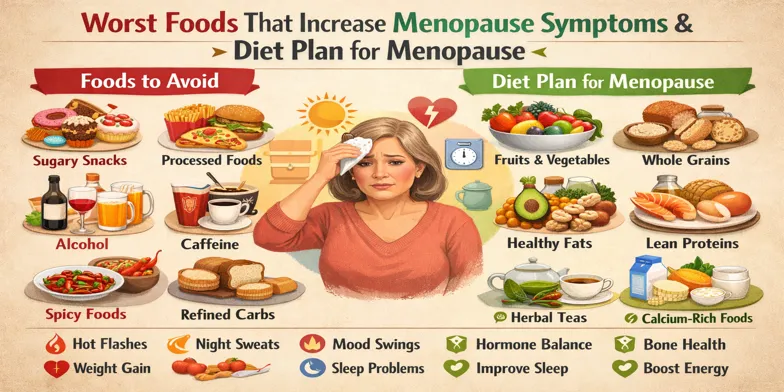
Menopause is not just the end of menstrual cycles—it is a major hormonal shift that affects almost every system in a woman’s body. During this phase, the level of estrogen (a key female hormone) starts to decline. This hormonal change doesn’t just affect your reproductive health, but also your metabolism, mood, sleep patterns, and body weight.
As a result, many women begin to notice sudden and uncomfortable changes in their daily life, such as:
- Unexpected weight gain, especially around the belly
- Frequent hot flashes and night sweats
- Mood swings, irritability, or anxiety
- Constant tiredness and low energy levels
These symptoms can feel frustrating and sometimes overwhelming—but the good news is that they can be managed effectively.
This is where a well-balanced diet plan for menopause becomes extremely important. According to experts at CatchHealth, dietician Nandini Sikka highlights that the right food choices can support hormone balance, improve energy levels, and reduce the intensity of menopause symptoms—without relying only on medications.
Instead of ignoring these changes, understanding what your body needs during this phase can help you feel more in control and healthier.
Table of Contents
ToggleUnderstanding the Link Between Food and Menopause Symptoms
How Hormonal Changes Impact Your Body
During menopause, your body produces less estrogen. This hormone is responsible for regulating fat distribution, mood, and body temperature.
When estrogen drops:
- Fat starts storing around the belly
- Body temperature fluctuates (hot flashes)
- Mood becomes unstable
- Sleep quality decreases
Why Diet Plan for Menopause is So Powerful
Food directly impacts hormones. Eating the wrong foods can:
- Increase inflammation
- Disturb blood sugar levels
- Trigger hormonal imbalance
On the other hand, a well-structured diet plan for menopause can:
- Stabilize hormones
- Improve metabolism
- Reduce symptoms naturally
Worst Foods That Increase Menopause Symptoms
Understanding what NOT to eat is just as important as knowing what to eat.
1. Sugary Foods and Drinks
Sugar causes rapid spikes in blood sugar, which leads to energy crashes and mood swings.
Why it worsens menopause:
- Increases belly fat
- Causes fatigue
- Triggers irritability
Examples:
Soft drinks, sweets, bakery items
2. Processed and Junk Foods
These foods are high in preservatives and unhealthy fats.
Why they are harmful:
- Increase inflammation
- Slow down metabolism
- Make weight loss difficult
3. Excess Caffeine
While tea and coffee are common, too much caffeine can worsen symptoms.
Effects:
- Poor sleep
- Increased anxiety
- More frequent hot flashes
4. Alcohol
Alcohol interferes with liver function and hormone regulation.
Effects:
- Disturbs sleep cycle
- Increases hot flashes
- Leads to dehydration
5. Spicy and Oily Foods
These foods can raise your body temperature.
Effects:
- Trigger sweating
- Cause digestive discomfort
- Increase irritation
Data Table: Foods to Avoid vs Their Impact on Menopause
| Food Type | What It Does to Your Body | Symptom Triggered | Risk Level |
| Sugary Foods | Spikes blood sugar | Mood swings, weight gain | High |
| Junk Food | Increases inflammation | Fat gain, fatigue | High |
| Caffeine | Stimulates nervous system | Anxiety, poor sleep | Moderate |
| Alcohol | Affects liver & hormones | Hot flashes, insomnia | High |
| Spicy/Oily Food | Raises body temperature | Sweating, discomfort | Moderate |
What You Should Eat for Hormone Balance
When it comes to managing menopause symptoms, what you eat every day plays a powerful role. A well-balanced diet plan for menopause is not about strict dieting—it’s about choosing the right foods that support your body during hormonal changes.
According to experts at CatchHealth, dietician Nandini Sikka recommends focusing on natural, home-cooked, and nutrient-rich foods that help balance hormones, improve energy, and prevent weight gain.
Let’s understand in detail what your body actually needs during menopause:
1. Fruits and Vegetables
Fruits and vegetables should form the base of your diet plan for menopause because they are packed with essential nutrients like fiber, vitamins, and antioxidants.
Why they are important:
- Help reduce inflammation caused by hormonal imbalance
- Improve digestion and gut health
- Support natural hormone regulation
- Keep you full for longer, helping in weight control
What to include:
- Fruits: Apples, bananas, berries, papaya
- Vegetables: Spinach, broccoli, carrots, beans
2. Calcium-Rich Foods (For Strong Bones)
During menopause, estrogen levels drop, which can weaken your bones and increase the risk of osteoporosis (bone loss). That’s why calcium becomes extremely important.
Why they are important:
- Strengthen bones and joints
- Reduce the risk of fractures
- Support muscle function
What to include:
- Milk, curd (yogurt), paneer
- Almonds and sesame seeds
3. Protein-Rich Foods (For Weight and Muscle Health)
As you age, muscle mass naturally decreases, which slows down metabolism and leads to weight gain. Protein helps prevent this.
Why protein is important:
- Maintains muscle strength
- Boosts metabolism
- Keeps you full and reduces cravings
What to include:
- Eggs
- Dal (lentils), chickpeas, beans
- Paneer, tofu, or chicken
4. Healthy Fats (For Hormone Support)
Many people think fats are unhealthy, but the right kind of fats are essential—especially during menopause.
Why healthy fats are important:
- Help in hormone production
- Support brain health and mood stability
- Reduce inflammation in the body
What to include:
- Nuts (almonds, walnuts)
- Seeds (flaxseeds, chia seeds)
- Olive oil
5. Whole Grains (For Energy and Blood Sugar Control)
Whole grains are much better than refined carbs because they digest slowly and keep your blood sugar stable.
Why they are important:
- Prevent sudden energy crashes
- Help control weight
- Improve digestion due to high fiber
What to include:
- Oats
- Brown rice
- Whole wheat roti
Final Insight: Build a Balanced Plate
A successful diet plan for menopause is all about balance. Your daily plate should include:
- Fiber (fruits & vegetables)
- Protein (dal, eggs, paneer)
- Healthy fats (nuts & seeds)
- Complex carbs (whole grains)
By combining these nutrients in the right way, you not only reduce menopause symptoms but also improve your overall health and energy levels.
Simple 1-Day Diet Plan for Menopause
This is a practical diet plan for menopause you can follow:
Morning
- Warm water with lemon
- Oats or vegetable poha
Mid-Morning
- 1 fruit + nuts
Lunch
- 2 roti or brown rice
- Dal/paneer
- Vegetables
Evening
- Buttermilk or herbal tea
- Roasted snacks
Dinner
- Light khichdi or soup
- Steamed vegetables
Lifestyle Tips to Support Your Diet Plan for Menopause
A healthy diet plan for menopause works best when combined with the right lifestyle habits. Food alone is not enough—your daily routine, activity level, stress, and sleep all play a major role in how your body responds during menopause.
According to experts at CatchHealth, dietician Nandini Sikka emphasizes that small lifestyle changes can significantly reduce menopause symptoms and improve overall well-being.
Let’s understand these lifestyle tips in detail:
1. Stay Active (Boost Metabolism and Control Weight)
Physical activity is one of the most effective ways to manage menopause symptoms. During menopause, metabolism naturally slows down, which makes weight gain easier—especially around the belly area.
Why staying active is important:
- Helps burn calories and control weight gain
- Improves mood by releasing “feel-good” hormones
- Reduces stress and anxiety
- Improves heart and bone health
What you can do:
- Walk for at least 30 minutes daily
- Try light exercises like yoga or stretching
- Include strength training 2–3 times a week
2. Manage Stress (Control Hormonal Imbalance)
Stress has a direct impact on your hormones. High stress levels increase cortisol (stress hormone), which can worsen menopause symptoms like mood swings, weight gain, and sleep problems.
Why stress management is important:
- Helps balance hormones naturally
- Reduces irritability and anxiety
- Improves emotional well-being
What you can do:
- Practice meditation for 10–15 minutes daily
- Try deep breathing exercises
- Spend time doing activities you enjoy (reading, music, walking)
3. Sleep Well (Essential for Recovery and Hormone Balance)
Sleep problems are very common during menopause due to night sweats, anxiety, and hormonal changes. Poor sleep can make all symptoms worse.
Why good sleep is important:
- Helps regulate hormones
- Improves energy levels
- Reduces mood swings and fatigue
What you can do:
- Aim for 7–8 hours of sleep every night
- Avoid mobile screens before bedtime
- Keep your room cool and comfortable
- Avoid caffeine in the evening
4. Stay Hydrated (Control Hot Flashes and Energy Levels)
Water plays a key role in regulating body temperature and keeping your body functioning properly—especially during menopause.
Why hydration is important:
- Helps reduce hot flashes and sweating
- Improves digestion
- Keeps skin healthy
- Maintains energy levels
What you can do:
- Drink at least 7–8 glasses of water daily
- Include coconut water, herbal teas, or buttermilk
- Avoid sugary drinks and excess caffeine
Common Mistakes Women Make During Menopause
Many women unknowingly worsen their symptoms:
- Skipping meals
- Eating too much sugar
- Ignoring protein
- Relying on processed food
- Drinking less water
Avoiding these mistakes makes your diet plan for menopause more effective.
Expert Advice by Dietician Nandini Sikka
Dietician Nandini Sikka from CatchHealth suggests focusing on consistency instead of extreme dieting.
Her key advice:
- Eat home-cooked meals
- Avoid processed food
- Maintain portion control
- Stay physically active
Following these simple habits can naturally improve menopause symptoms over time.
Frequently Asked Questions
Q1. Can a diet plan for menopause really help?
Yes, it helps balance hormones and reduce symptoms like hot flashes and weight gain.
Q2. What foods should be avoided?
Sugar, junk food, caffeine, alcohol, and spicy foods.
Q3. Can I lose weight during menopause?
Yes, with a proper diet plan for menopause and regular exercise.
Q4. How long does it take to see results?
With consistency, you may see improvements within a few weeks.
Conclusion:
Menopause is a natural phase of life, but how you experience it largely depends on your daily choices. While hormonal changes are unavoidable, the intensity of symptoms like weight gain, hot flashes, and low energy can be managed effectively with the right approach.
By avoiding trigger foods and following a well-balanced diet plan for menopause, you can support your body, stabilize hormones, and feel more in control of your health. Simple changes like eating clean, staying active, and maintaining a healthy routine can make a noticeable difference in how you feel every day.
According to experts at CatchHealth, dietician Nandini Sikka emphasizes that consistency is the key. You don’t need extreme diets—just a sustainable and practical lifestyle that works for you.
Remember, menopause is not the end of your health journey—it’s the beginning of a new phase where taking care of your body becomes even more important.
Start with small steps today, stay consistent, and over time, these habits will lead to better energy, improved mood, and long-term well-being.