


High blood pressure rarely announces itself. Many people in Delhi find out only during a routine check-up, a pre-surgery test or a workplace health camp. By then, the numbers have usually been creeping up quietly for years.
Medicines, a balanced diet and daily movement remain the foundation of blood pressure care. But many of our clients at Catchealth also ask a simple question: “Is there something I can do at home, with my own hands, to feel calmer and support my BP?”
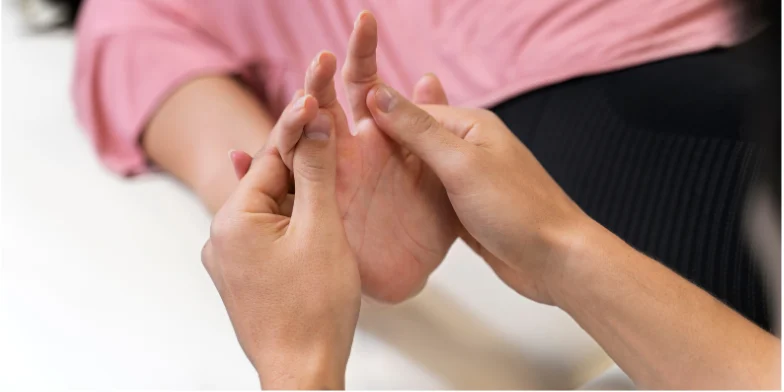
That is where acupressure comes in. Acupressure is a traditional practice rooted in Chinese medicine. It involves applying firm, steady pressure with your fingers on specific spots on the body, often called pressure points. Unlike acupuncture, no needles are used, so you can practise it at home, at your desk or before bed.
We walk you through seven well-known acupressure points for high blood pressure, how to locate them, how long to press, and what current research honestly says. We also cover the ideal bp range, what a 90 60 blood pressure reading means, and why food choices matter just as much as any home remedy.
If you are already noticing headaches, dizziness or blurred vision, first read our guide on high blood pressure ke lakshan to understand the warning signs.
Table of Contents
ToggleKnow Your Numbers First: The Ideal BP Range Explained
Before trying any home technique, you need to know where your readings stand. A blood pressure reading has two numbers. The top number (systolic) shows the pressure when your heart beats. The bottom number (diastolic) shows the pressure when your heart rests between beats.
For most healthy adults, the ideal bp range is below 120/80 mmHg. Readings that stay above this, especially 130/80 mmHg and higher, need attention and a conversation with your doctor.
| Category | Systolic (mmHg) | Diastolic (mmHg) | What It Usually Means |
|---|---|---|---|
| Low (hypotension) | Below 90 | Below 60 | May cause dizziness or fatigue; get checked if symptomatic |
| Normal / ideal | Below 120 | Below 80 | Healthy range; maintain with lifestyle |
| Elevated | 120–129 | Below 80 | Early warning; lifestyle changes help |
| Stage 1 hypertension | 130–139 | 80–89 | Lifestyle changes; doctor may consider medicine |
| Stage 2 hypertension | 140 or higher | 90 or higher | Medical treatment usually needed |
| Hypertensive crisis | Above 180 | Above 120 | Seek emergency care immediately |
Categories based on American Heart Association guidance. Your doctor may use slightly different thresholds based on age, diabetes, kidney health and other conditions.
What Does a 90 60 Blood Pressure Reading Mean?
A 90 60 blood pressure reading sits at the lower edge of normal. Many young, active adults live comfortably at this level without any problems. However, if a reading around 90/60 comes with dizziness, fainting, blurred vision or extreme tiredness, it may point to low blood pressure.
This matters for acupressure too. Points that help relax the body and lower pressure are not suitable for someone whose BP is already low. So always check your reading first. If you regularly see numbers near 90/60 and feel unwell, speak to your doctor before trying any acupressure for bp.
How Acupressure for BP Works (And What Science Honestly Says)
In traditional Chinese medicine, the body is believed to have energy channels called meridians. Pressing specific points along these channels is thought to restore balance. Modern researchers explain it differently. Firm, steady pressure may calm the nervous system, lower stress hormones and help blood vessels relax.
Stress is a big part of this story. When you are anxious, your body releases adrenaline and cortisol. Your heart beats faster and your blood vessels tighten, which pushes BP up. A few quiet minutes of slow breathing and pressing acupressure points for bp can switch the body towards its “rest and digest” mode.
What the research shows
- Several small clinical studies have reported short-term drops in blood pressure after regular acupressure sessions, especially on points such as Taichong (LV3) and Quchi (LI11).
- Research reviews note that many of these studies are small, short or not well controlled. So the evidence is promising but not strong enough to replace medicine.
- Benefits seem most noticeable for stress-related BP spikes and for overall relaxation.
Our honest view at Catchealth is simple. Acupressure is low-cost, low-risk and easy to add to your day. Used alongside medication, good food and exercise, it can be a helpful calming ritual. Used alone, it is not enough to control hypertension.
7 Acupressure Points for High Blood Pressure You Can Press at Home
These seven points are among the most commonly used high bp acupressure points. For each one, use your thumb or index finger. Apply firm but comfortable pressure, breathe slowly, and hold for the time suggested. You should feel mild pressure or a dull ache, never sharp pain.
1. Taichong (LV3) – The “Great Surge” Point on Your Foot
Where to find it: On the top of your foot, in the hollow between the big toe and second toe bones, about two finger-widths back from the web of the toes.
How to press: Press firmly for 1–2 minutes on each foot while breathing deeply.
Why it helps: Taichong is one of the most studied points for hypertension. It is traditionally used to release tension, irritability and headaches linked to stress.
2. Quchi (LI11) – The Elbow Crease Point
Where to find it: Bend your elbow. The point sits at the outer end of the elbow crease, on the thumb side.
How to press: Press with the opposite thumb for 1–2 minutes, then switch arms.
Why it helps: Quchi is traditionally linked to clearing “heat” from the body. It appears often in studies on acupressure and blood pressure.
3. Neiguan (PC6) – The Inner Wrist Calming Point
Where to find it: Place three fingers across your inner wrist, starting at the wrist crease. The point lies just below your third finger, between the two tendons.
How to press: Apply steady pressure for 1–2 minutes on each wrist.
Why it helps: Neiguan is well known for easing nausea and anxiety. By calming the mind and steadying the heart rate, it may help with stress-related BP rises.
4. Fengchi (GB20) – The “Wind Pool” at the Base of the Skull
Where to find it: At the back of your head, in the two hollows where your neck muscles meet the base of the skull.
How to press: Place both thumbs in these hollows. Press gently upward for 1–2 minutes while tilting your head back slightly.
Why it helps: This point is often used for tension headaches, neck stiffness and dizziness. These symptoms commonly show up with high BP.
5. Zusanli (ST36) – The Leg Point for Overall Balance
Where to find it: Four finger-widths below the kneecap, and one finger-width towards the outside of the shinbone.
How to press: Press or massage in small circles for 2 minutes on each leg.
Why it helps: Zusanli is known as a general wellness point. It is traditionally used to support digestion, energy and overall balance.
6. Shenmen (HT7) – The “Spirit Gate” for Stress and Sleep
Where to find it: On the wrist crease, on the little-finger side, in the small hollow next to the tendon.
How to press: Press gently for 1–2 minutes on each wrist, ideally before bedtime.
Why it helps: Shenmen is used to ease anxiety and improve sleep. Poor sleep and constant worry are both linked to higher blood pressure.
7. Yongquan (KI1) – The Grounding Point on the Sole
Where to find it: On the sole of your foot, in the depression about one-third of the way down from the base of the toes, when you curl your toes.
How to press: Sit comfortably and press with your thumb for 1–2 minutes on each foot.
Why it helps: Yongquan is traditionally used to calm the mind and “bring energy downward.” Many people find it deeply relaxing at the end of a long day.
Your 10-Minute Daily Pressure Points Routine (Quick Reference)
Keep this table handy on your phone or print it out. It sums up all seven pressure points in one place.
| Point | Location | Hold Time | Best For |
|---|---|---|---|
| Taichong (LV3) | Top of foot, between big and second toe | 1–2 min each foot | Stress, tension, irritability |
| Quchi (LI11) | Outer end of elbow crease | 1–2 min each arm | Feeling hot, flushed, restless |
| Neiguan (PC6) | Inner wrist, 3 fingers below crease | 1–2 min each wrist | Anxiety, racing heart, nausea |
| Fengchi (GB20) | Base of skull, back of neck | 1–2 min | Headache, neck stiffness |
| Zusanli (ST36) | 4 fingers below kneecap, outer shin | 2 min each leg | Overall balance, low energy |
| Shenmen (HT7) | Wrist crease, little-finger side | 1–2 min each wrist | Poor sleep, worry |
| Yongquan (KI1) | Sole of foot, upper third | 1–2 min each foot | Deep relaxation at night |
Simple steps to make it a habit
- Check your BP first. If it is below 90/60 or you feel faint, skip the session and consult your doctor.
- Sit somewhere quiet. Loosen tight clothing and put your phone on silent.
- Breathe slowly. Inhale for four counts and exhale for six counts throughout.
- Press one point at a time. Use steady pressure, not hard jabbing.
- Stay consistent. Once or twice a day, morning and evening, works well for most people.
- Track your readings. Note your BP in a diary for 2–4 weeks and share it with your doctor or dietitian.
Safety First: When to Avoid High BP Acupressure Points
Acupressure is gentle, but it is not right for everyone at every moment. Please avoid it or speak to your doctor first if:
- You are pregnant. Some points can stimulate uterine activity, so pregnant women should only try acupressure under expert guidance.
- Your BP reading is 180/120 mmHg or higher, or you have chest pain, breathlessness, confusion or weakness on one side. This is an emergency. Go to a hospital immediately.
- Your BP is low (around 90/60 or below) and you feel dizzy or weak.
- The skin over a point has a wound, rash, swelling, varicose veins or infection.
- You have a bleeding disorder, take blood thinners, or have had recent surgery or fractures near the point.
- You have just eaten a heavy meal or feel very tired. Wait at least 30–60 minutes.
Beyond Pressure Points: Why Your Plate Matters Most
Here is something Nandini Sikka, dietitian at Catchealth, often tells clients: “No home remedy can undo a high-salt, highly processed diet. Food is where lasting BP control truly begins.”
Acupressure can help you feel calmer, but your daily food choices do the heavy lifting. Research-backed eating patterns like the DASH diet focus on more vegetables, fruits, whole grains, pulses and low-fat dairy, and less salt and packaged food.
| Eat More Of | Limit or Avoid |
|---|---|
| Leafy greens like palak, methi and bathua | Pickles, papad and salty namkeen |
| Seasonal fruits like banana, orange and papaya | Packaged chips, instant noodles and sauces |
| Whole grains like oats, jowar, bajra and brown rice | Maida-based bakery items and fried snacks |
| Dals, rajma, chana and sprouts | Processed meats and ready-to-eat curries |
| Low-fat curd, buttermilk and paneer | Excess tea, coffee and sugary drinks |
| Unsalted nuts and seeds like flaxseed and almonds | Alcohol and smoking |
For more practical, Indian-kitchen-friendly tips, read our detailed guide on blood pressure kaise kam kare.
Get a personalised plan from Catchealth
Every body is different. Your ideal plan depends on your age, weight, medicines, kidney health, diabetes status and daily routine. That is why generic diet charts often fail.
At Catchealth, Nandini Sikka and the team create personalised meal plans that fit your tastes, work schedule and family cooking. If you are looking for a trusted Dietitian for Blood Pressure in East Delhi, our team can help you build sustainable habits that combine smart eating, stress relief practices like acupressure, and regular BP monitoring.
Frequently Asked Questions
1. Can acupressure points for high blood pressure replace my BP medicine?
No. Acupressure can support relaxation and may help with stress-related BP spikes. However, it cannot replace prescribed medicines. Always continue your treatment and discuss any change with your doctor.
2. How quickly does acupressure for bp show results?
Many people feel calmer within a few minutes of a session. Any effect on BP readings tends to be small and short-term. Regular practice over a few weeks, combined with diet and exercise, gives the best overall results.
3. What is the ideal bp range for adults?
For most adults, the ideal bp range is below 120/80 mmHg. Your doctor may set a personal target based on your age and health conditions such as diabetes or kidney disease.
4. Is 90 60 blood pressure normal?
A 90 60 blood pressure reading is at the lower edge of normal. It is usually fine if you feel well. If it comes with dizziness, fainting or fatigue, consult a doctor, and avoid BP-lowering acupressure points until you get advice.
5. How many times a day should I press acupressure points for bp?
Once or twice a day is enough for most people. Hold each point for 1–2 minutes with slow breathing. More pressure or longer sessions do not mean better results.
6. Which is the most important pressure point for high BP?
Taichong (LV3) on the top of the foot and Quchi (LI11) at the elbow are among the most commonly studied high bp acupressure points. Still, combining a few calming points in one routine often works better than relying on just one.
7. Can diet really lower blood pressure?
Yes. Reducing salt, eating more potassium-rich fruits and vegetables, and choosing whole foods can make a meaningful difference. A qualified dietitian, such as the team at Catchealth, can build a plan suited to your body and lifestyle.
The Bottom Line: Small Daily Habits, Steadier Numbers
The seven acupressure points for high blood pressure in this guide are simple, free and easy to practise anywhere. They can help you slow down, breathe deeper and manage the stress that often pushes BP higher.
But think of them as one piece of a bigger picture. Know your ideal bp range, check your readings regularly, take your medicines as prescribed, and give your diet the attention it deserves.
If you want expert support, book a consultation with Nandini Sikka at Catchealth. Together, we can create a realistic plan that helps you bring your numbers down and keep them there.