

If you have ever typed “pcod means what” into a search bar, you are not alone. PCOD stands for Polycystic Ovarian Disease. It is a hormonal condition in which the ovaries release many immature or partly mature eggs. Over time, these eggs can collect as small fluid-filled sacs, often called cysts, on the ovaries.
So, what is PCOD Symptoms in females in simple terms? It is a hormonal imbalance that disrupts ovulation and raises the level of male hormones (androgens) in the body. Every woman naturally produces a small amount of androgens. In PCOD, the ovaries produce more than usual, and that excess shows up as irregular periods, acne, weight gain, and unwanted hair.
PCOD vs PCOS: Are They the Same?
The two terms are often used interchangeably, especially in India. Many doctors treat PCOD as the milder, more lifestyle-driven form, while PCOS (Polycystic Ovary Syndrome) is described as a broader metabolic and endocrine disorder. Whatever the label, the core issues are the same: hormones, insulin and ovulation.
What Are Bilateral Polycystic Ovaries?
You may see the phrase bilateral polycystic ovaries on an ultrasound report. “Bilateral” simply means both ovaries are affected. The scan shows many small follicles, usually arranged around the edge of each ovary, along with an increase in ovarian volume. It sounds alarming, but it is a common finding. It does not confirm PCOD on its own; doctors also look at your periods and androgen levels before making a diagnosis.
Why Does PCOD Cause Facial Hair? The Hormone Story Explained
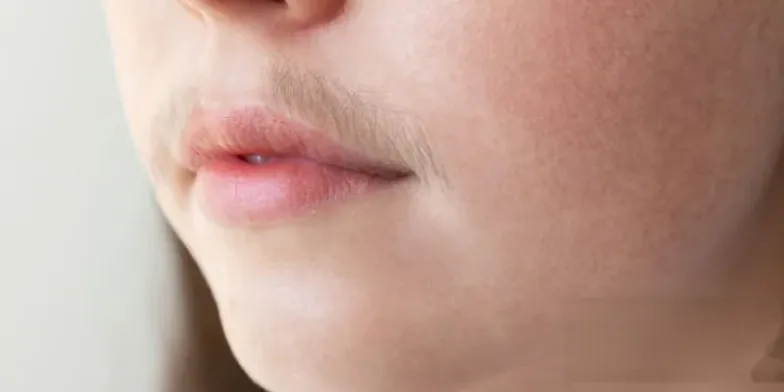
Excess facial and body hair in women has a medical name: hirsutism. It means coarse, dark “terminal” hair growing in places where men typically grow hair, such as the upper lip, chin, jawline, neck, chest, lower abdomen and back.
Here is what happens inside the body:
- Androgens rise. In PCOD, the ovaries produce extra testosterone and related hormones.
- Insulin adds fuel. Many women with PCOD have insulin resistance. High insulin pushes the ovaries to make even more androgens and lowers a protein (SHBG) that normally keeps testosterone in check.
- Hair follicles respond. Follicles on the face and body are sensitive to androgens. Fine, light “peach fuzz” turns into thick, dark hair that grows faster and returns quickly after removal.
Hirsutism is widely regarded as a reliable outward marker of high androgen levels, and PCOD is its most common cause. Skin changes are very common in this condition: research from a large multi-ethnic PCOS clinic found that 92% of women showed skin-related signs, and South Asian women were among the groups with the highest hirsutism scores. That makes facial hair especially relevant for Indian women.
So, Is Facial Hair a Warning Sign?
Yes, it can be, particularly when it shows up alongside other PCOD symptoms. A few stray hairs are normal for many women, and genetics plays a part. But you should pay closer attention if:
- The hair is coarse and dark, not fine and light
- It appears on the chin, jawline, neck, chest or around the navel
- It started or worsened suddenly
- It comes with irregular periods, acne, scalp hair thinning or weight gain around the waist
Rapidly worsening hair growth, a deepening voice or other sudden changes need prompt medical evaluation, as they can occasionally point to other hormonal conditions.
Beyond Facial Hair: Common PCOD Symptoms Every Woman Should Know
PCOD rarely shows up as a single sign. It tends to appear as a cluster, and the mix differs from woman to woman. Some women are lean with irregular cycles; others have regular periods but struggle with acne and weight. The table below brings together the most common PCOD symptoms, what causes them, and how they usually feel day to day.
| Symptom | What you may notice | Main driver | When to act |
|---|---|---|---|
| Hirsutism (excess hair) | Coarse, dark hair on chin, upper lip, jawline, chest or belly | High androgens | If hair returns quickly after removal or keeps spreading |
| Irregular or missed periods | Cycles longer than 35 days, fewer than 8 periods a year, or no periods | Lack of regular ovulation | After 2–3 irregular cycles in a row |
| Acne and oily skin | Persistent breakouts on jaw, chin and neck, often after the teenage years | High androgens | If acne does not respond to regular skincare |
| Weight gain | Fat gain around the waist; difficulty losing weight | Insulin resistance | If weight rises without changes in diet or activity |
| Scalp hair thinning | Widening parting or thinning at the crown | Androgen effect on scalp follicles | If hair fall continues for over 3 months |
| Dark skin patches | Velvety dark skin on neck, underarms or groin (acanthosis nigricans) | Insulin resistance | As soon as you notice it |
| Fertility difficulties | Trouble conceiving after 12 months of trying (6 months if over 35) | Irregular ovulation | At the 12- or 6-month mark |
| Mood changes and fatigue | Low energy, anxiety, low mood, poor sleep | Hormonal shifts and blood sugar swings | If it affects daily life |
Not everyone gets every symptom. Even two or three of these together are reason enough to speak with a doctor.
Don’t Just Pluck and Ignore: When to See a Doctor
Removing hair treats the surface. It does nothing for the hormones underneath. If facial hair keeps returning, book an appointment with a gynaecologist or endocrinologist, especially if you also have irregular cycles or acne.
Doctors commonly use the Rotterdam criteria, which confirm PCOD/PCOS when at least two of these three are present:
- Irregular or absent ovulation (shown by irregular periods)
- Signs of high androgens, either visible (hirsutism, acne, hair thinning) or in blood tests
- Polycystic ovaries on ultrasound, such as bilateral polycystic ovaries
Your doctor may also order:
- Hormone tests: testosterone, LH, FSH, prolactin and thyroid (TSH)
- Blood sugar and insulin tests, such as fasting glucose and HbA1c
- A lipid profile to check cholesterol
- A pelvic ultrasound
These tests also rule out other conditions that can cause similar hair growth. Early diagnosis matters, because PCOD left unmanaged raises the long-term risk of type 2 diabetes, heart disease, and fatty liver.
PCOD Problem Treatment: What Actually Works
There is no single pill that fixes everything. Effective PCOD problem treatment combines medical care with daily habits, tailored to your symptoms and goals, whether that is clearer skin, regular periods or pregnancy.
Medical Options
Your doctor may suggest one or more of the following, based on your health profile:
- Hormonal contraceptive pills to regulate cycles and lower androgen levels
- Anti-androgen medicines to slow hair growth and reduce acne
- Insulin-sensitising medicines such as metformin, if insulin resistance is present
- Ovulation-support treatment for women trying to conceive
Never start or stop these without medical supervision. Some are not suitable if you are planning a pregnancy.
Treating Facial Hair Directly
While hormones are being balanced, these options help with existing hair:
- Laser hair reduction, which gives longer-lasting results and works best on dark hair
- Electrolysis, which can remove hair permanently, one follicle at a time
- Prescription creams that slow facial hair growth
- Threading, waxing or shaving for short-term relief (shaving does not make hair thicker)
Hair growth cycles are slow, so medical treatment usually takes around six months to show a visible difference.
How to Cure PCOD: The Honest Answer
Many women ask us how to cure PCOD. The honest answer is that PCOD has no permanent cure yet, but it can be managed so well that symptoms fade into the background. Losing even 5–10% of body weight, if you are overweight, can restore ovulation and lower androgen levels for many women. Diet, movement, sleep and stress control remain the foundation of every successful plan, which is where a qualified PCOD dietitian makes a real difference.
Eat to Balance Your Hormones: A 7-Day PCOD Diet Plan
Food is one of the most powerful tools you have against PCOD. The goal is steady blood sugar, lower insulin and less inflammation, which in turn helps bring androgens down. This 7-Day PCOD Diet Plan uses simple Indian meals built on whole grains, protein, fibre and healthy fats.
| Day | Breakfast | Mid-morning | Lunch | Evening snack | Dinner |
|---|---|---|---|---|---|
| Day 1 | Vegetable moong dal chilla with mint chutney | 1 guava | 1 multigrain roti, palak dal, cucumber salad | Roasted chana (a small handful) | Grilled paneer or tofu with sautéed vegetables |
| Day 2 | Vegetable oats upma | Buttermilk | Brown rice, rajma, mixed green salad | Green tea with 4–5 almonds | Lauki soup and 1 besan roti |
| Day 3 | 2 boiled eggs or sprouts salad with 1 slice whole-wheat toast | 1 apple | 2 jowar rotis, mixed vegetable sabzi, curd | Cucumber and carrot sticks with hummus | Moong dal khichdi with vegetables |
| Day 4 | Ragi dosa with sambar | Coconut water | Quinoa pulao with vegetables and raita | Roasted makhana | Grilled fish or chickpea curry with salad |
| Day 5 | Besan chilla with paneer stuffing | 1 pear | 1 bajra roti, methi dal, beetroot salad | Sprouts chaat | Vegetable soup and paneer tikka |
| Day 6 | Unsweetened Greek yoghurt with chia seeds and berries | 5–6 walnut halves | Brown rice, chole, onion-tomato salad | Herbal tea with roasted seeds | Stir-fried tofu or chicken with broccoli and capsicum |
| Day 7 | Vegetable poha with peanuts | 1 orange | 2 multigrain rotis, bhindi sabzi, dal, curd | Spearmint tea with a small fruit | Dalia khichdi with vegetables |
Foods to limit: white bread and maida, sugary drinks and packaged juices, sweets, deep-fried snacks and highly processed foods.
Helpful habits: drink 2.5–3 litres of water daily, include protein in every meal, and try to finish dinner 2–3 hours before bed. Some small studies suggest spearmint tea may help lower androgen levels, but it is a support, not a treatment.
This plan is a general guide. Portions and food choices should be personalised for your weight, activity, lab results and any medicines you take.
Small Daily Habits That Make a Big Difference
Diet works best when paired with a few consistent lifestyle changes:
- Move every day. Aim for at least 150 minutes of moderate exercise a week. Brisk walking, cycling, yoga and strength training twice a week all improve insulin sensitivity.
- Prioritise sleep. Seven to eight hours of good sleep helps regulate hunger hormones and cortisol.
- Manage stress. Chronic stress raises cortisol, which can worsen insulin resistance. Breathing exercises, journalling or a short evening walk can help.
- Track your cycle. A period-tracking app gives your doctor useful data and helps you spot patterns early.
- Be gentle with your skin. Avoid harsh bleaching or over-plucking, which can cause irritation, ingrown hairs and dark spots.
- Look after your mind. Visible PCOD symptoms like facial hair can affect confidence. Talking to a counsellor or a support group is a sign of strength, not weakness.
Expert Insight from Dt. Nandini Sikka, CatcHealth
Dt. Nandini Sikka, PCOD dietitian at CatcHealth, works closely with women managing PCOD. Her experience points to a pattern that comes up again and again:
“Most women I meet have spent years treating facial hair as a beauty problem. Once we look at their periods, their energy levels and their food habits together, the hormonal picture becomes clear. When we fix meal timing, add enough protein and cut back on refined carbs, many of them notice more regular cycles within a few months, and slower hair regrowth over time. Consistency matters more than perfection.”
At CatcHealth, every PCOD plan starts with a detailed review of your symptoms, lab reports and lifestyle. The aim is a realistic, food-first plan built around Indian meals you already enjoy, not a crash diet.
Frequently Asked Questions About PCOD
1. What is PCOD, in simple words?
PCOD is a hormonal condition in which the ovaries release immature eggs and produce extra male hormones. This leads to irregular periods, acne, weight gain and unwanted hair growth.
2. Is facial hair always a sign of PCOD?
No. Genetics, certain medicines and other hormonal conditions can also cause it. But coarse, dark hair on the chin or jawline, especially with irregular periods, is one of the most common PCOD symptoms and is worth checking.
3. Will facial hair go away once PCOD is treated?
Treatment slows new hair growth and makes it finer, but existing hair often needs laser or electrolysis. Most women see results after about six months of consistent treatment.
4. Are bilateral polycystic ovaries dangerous?
On their own, they are not dangerous. The finding simply means both ovaries show many small follicles on ultrasound. Your doctor will combine it with your symptoms and blood tests before diagnosing PCOD.
5. How to cure PCOD naturally?
PCOD cannot be cured permanently, but it can be controlled. A balanced, low-glycaemic diet, regular exercise, good sleep and weight management can reduce symptoms significantly, sometimes without long-term medicines.
6. Can I get pregnant with PCOD?
Yes. Many women with PCOD conceive naturally or with mild treatment. Lifestyle changes that restore ovulation often improve fertility.
7. How long does it take for a PCOD diet to show results?
Many women notice better energy and fewer cravings within 2–4 weeks. Changes in periods and skin usually take 3–6 months.
8. Should I consult a dietitian for PCOD?
Yes, if you can. A dietitian can personalise your meals to your lab reports, weight and medicines, which makes the plan easier to follow and more effective.
Listen to Your Body, Then Take Action
Facial hair is not just a cosmetic issue. When it is coarse, persistent or paired with irregular periods and acne, it is one of the clearest PCOD symptoms your body can send. The good news is that PCOD is highly manageable. With the right diagnosis, medical care where needed and a sustainable diet and lifestyle, most women see real improvements in their cycles, skin and confidence.
If you recognise yourself in this article, don’t wait for symptoms to pile up. Book a consultation with CatcHealth and get a personalised PCOD plan from Dt. Nandini Sikka, designed around your body, your reports and your routine.